
For Gabby Hadly (pictured), Manager of Public Health Emergency Preparedness and Response at the Snohomish County Health Department, readiness is both personal and professional.
“I’ve always been drawn to preparedness. The first Christmas present I remember asking for as a child was a fire escape ladder,” she said with a laugh.
Today, Hadly leads countywide efforts to prepare for and respond to emergencies that impact community health. She approaches this challenge by building partnerships that bring plans and processes to life.
Hadly’s path to public health was not linear. Initially on a medical school track, a clinical encounter sparked a question that changed her trajectory: How do we keep people from ending up in the emergency room or doctor’s office in the first place? A mentor recommended several books about the CDC’s Epidemic Intelligence Service (EIS) — her first introduction to epidemiology — and she was hooked. After earning a master’s degree in public health from the University of British Columbia, she joined the COVID-19 response in Texas, managing outbreaks across 59 counties.
She later served as an informatics epidemiologist at the Washington State Department of Health, where she built data systems to facilitate the flow of vital information between local health jurisdictions (LHJs) and the state.
“It was an amazing role, but I missed working with community members,” she said.
That desire led Hadly to the Kitsap Public Health District, where she managed their emergency preparedness and response program before taking her current role with Snohomish County two years ago.
“It’s not a matter of if we’ll face the next disaster or crisis; it’s a matter of when,” Hadly said. “Whether it’s a large-scale global pandemic or something more acute like flooding or wildfires, we don’t know. But one of my core motivators is helping our department be as ready as possible to serve our communities when they need us most. It’s our responsibility to have the relationships, trainings, plans and processes in place to succeed in times of crisis.”
Hadly also recognizes that things do not always go as planned.
“Historically, we’ve relied on plans and pre-established concepts of operations. But in practice, events rarely unfold exactly as written,” she said. “Because of this, I encourage my teams to be adaptable and innovative in how we approach our work.”
Emerging diseases remain a continual challenge.
“Local health departments are facing new threats every year — H5N1, mpox, malaria, measles and tuberculosis, to name a few,” she noted. “Our plans and processes need to be dynamic enough to respond to an endless array of threats at a moment’s notice.”
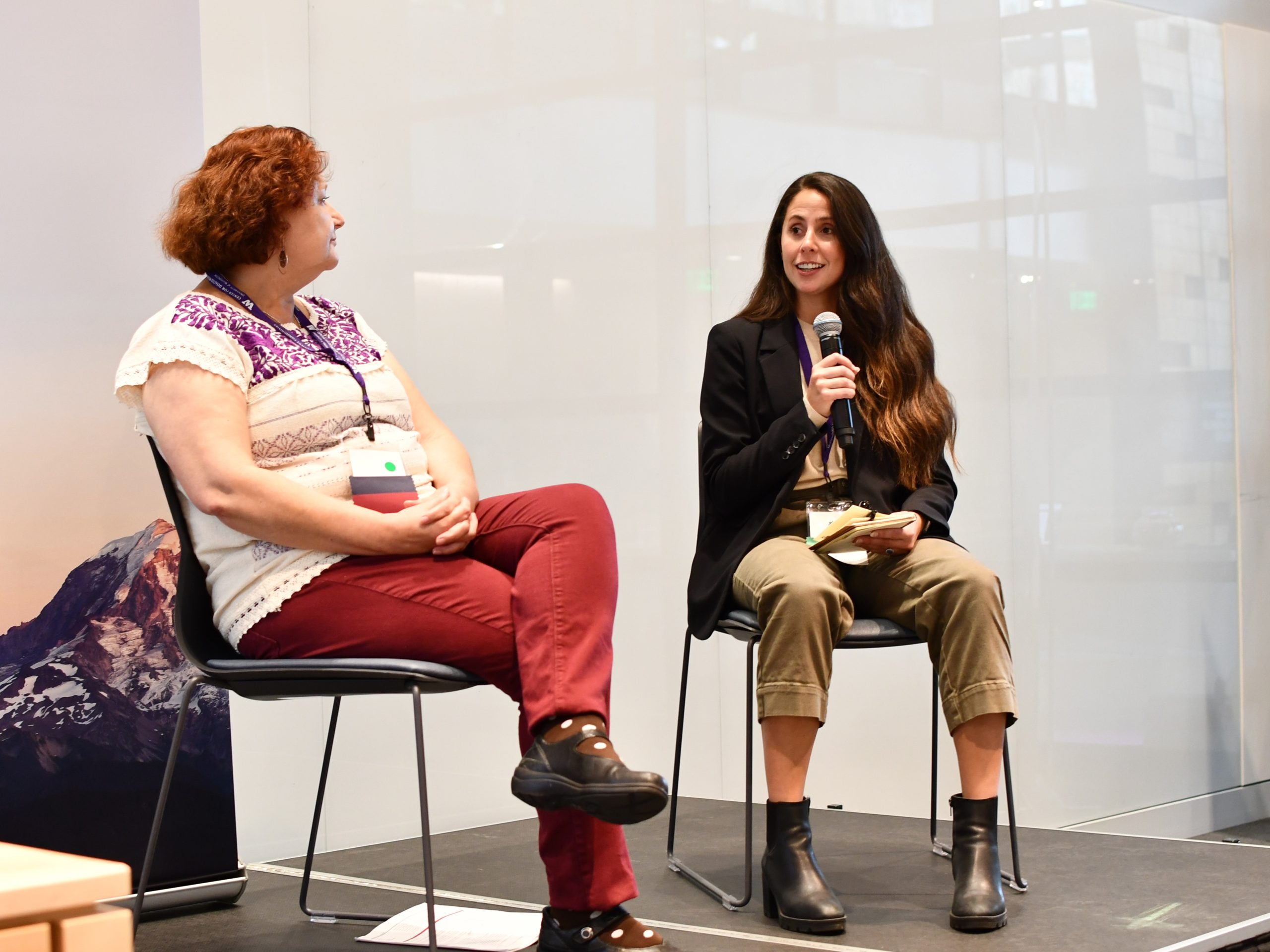 What gives Hadly hope is the new talent entering the field — something she did not expect, given the pandemic’s toll on the workforce.
“It’s well documented what public health and healthcare workers experienced during the pandemic,” she said. “I didn’t expect that to help recruitment, but I’m seeing incredibly brilliant and creative individuals enter the public health sector. The energy and ideas they bring are inspiring.”
Hadly’s definition of success has evolved over time.
“There’s a traditional mindset that a preparedness and response program is successful when a certain number of plans are finalized or specific trainings and exercises are completed,” she said. “But I’ve found that much of that can be done on the fly. The real key to success is having strong cross-sector partnerships within your jurisdiction, and close working relationships with other health departments across the state. Building relationships and trust is something that needs to happen ahead of time.”
Hadly credits the University of Washington’s Northwest Center for Evidence-Based Public Health Emergency Preparedness and Response (NWPHEPR) with helping to advance partnerships across the Northwest. She initially served on the Center’s Regional Coordinating Body, where recommendations for the Regional Workplan were developed, and later joined the Workforce Community of Practice. Presented with three options to support the workforce — resilience, retention or crisis decision-making and leadership — the group chose the latter, which led to the development of the Crisis Leadership Institute, held on September 8, 2025, at the UW’s Seattle campus.
One of the things Hadly values most about working with NWPHEPR is the opportunity for collaboration.
“Local public health work is often grant-mandated, which can limit our scope and sometimes stifle innovation,” she said. “But the NWPHEPR Center has a unique ability to act as an accelerator, taking on projects we don’t have the capacity to do locally and doing so in a collaborative and evidence-based way.”
Developing the Crisis Leadership Institute is one example of work that would have been difficult to accomplish at the local level. Now that the institute has been piloted, Hadly hopes future versions can be made available to staff across the U.S. Department of Health and Human Services’ Region 10.
“Having evidence-informed strategies and tools at the foundation of emergency preparedness and response work in Region 10 is something that will pay off in future disasters,” she said.
Looking ahead, Hadly sees the Center as a potential catalyst for practical, locally driven and tested solutions that preparedness teams across the Northwest can adopt and implement.