The inaugural Crisis Leadership Institute was developed using effective practices from peer-reviewed literature

On September 8, 2025, 16 regional partners from state agencies, local health jurisdictions, and Tribal nations convened at the University of Washington’s Seattle campus for the inaugural Crisis Leadership Institute, hosted by the Northwest Center for Evidence-Based Public Health Emergency Preparedness and Response (NWPHEPR).
During disasters and public health emergencies — from pandemics to earthquakes — effective leadership is essential for crisis resolution. The goal of the Crisis Leadership Institute was to strengthen crisis leadership capacity within the U.S. Department of Health and Human Services’ Region 10 public health workforce, which includes Alaska, Idaho, Oregon, Washington and 272 Tribal nations.
Throughout the day, participants engaged in sessions focused on five key crisis leadership competencies identified by Ronald Riggio and Toby Newstead in their 2023 review, “Crisis Leadership“:
- Sense making
- Coordinating Teamwork
- Decision-Making
- Communications
- Facilitating Learning
An additional module on Tribal Communications was developed by NWPHEPR with guidance from its Tribal Work Group.
 In its first year, the Crisis Leadership Institute was tailored for and piloted by regional partners who collaborate during real-world crises. Participants worked through modules aligned with each core competency and applied their learnings through group discussions based on a disaster scenario woven throughout the day. They also reflected on how to integrate key insights into their organizational preparedness plans and personal leadership development.
Participants appreciated the opportunity to learn and collaborate with partners from outside their own jurisdictions and organization types, and especially valued the chance to share knowledge across Tribal and non-Tribal contexts.
James Benzschawel, Senior Program Manager in Emergency Preparedness for the Alaska Native Tribal Health Consortium, shared, “I am happy to be here collaborating with people who are part of a large network of public health emergency preparedness professionals and look forward to collaborating more in the future.”
The Crisis Leadership Institute and its associated mentorship program represent the first intervention piloted by NWPHEPR. After its Steering Committee identified workforce capacity and leadership as the center’s initial focus area, NWPHEPR formed a Community of Practice composed of regional members committed to advancing workforce leadership. This group recommended launching a crisis leadership institute and mentorship program as foundational steps.
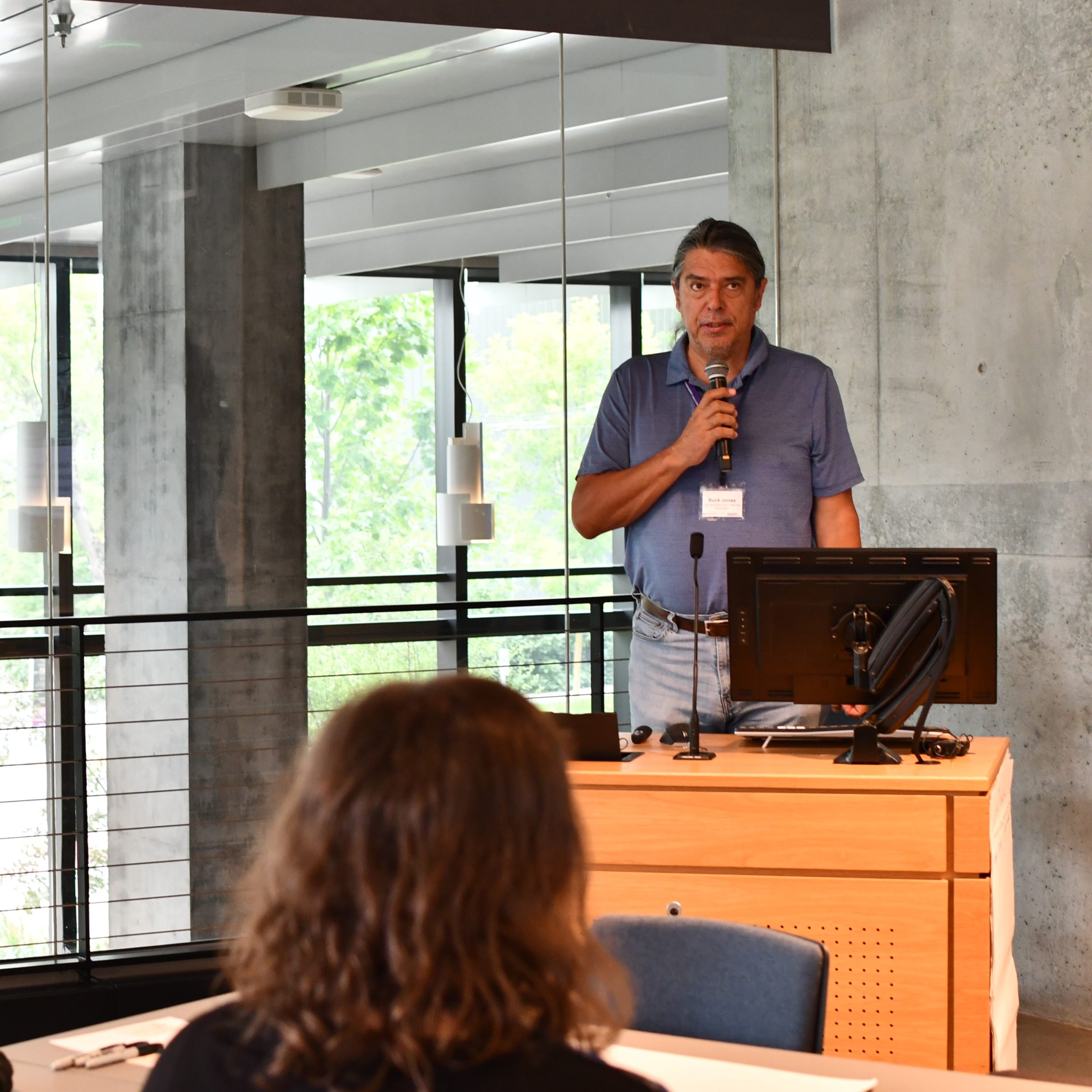 NWPHEPR developed the Crisis Leadership Institute using best practices from peer-reviewed literature, with input from both the Steering Committee and the Workforce Community of Practice. An evaluation team is assessing the effectiveness of the Institute and mentorship program by surveying participants before and after the event and throughout the peer learning sessions. Insights from this evaluation will inform future efforts to build workforce leadership capacity.
Looking ahead, Crisis Leadership Institute participants will engage in monthly peer learning sessions using the ECHO Model, which fosters “a continuous loop of learning, mentoring and peer support.”
Photos from the event are available online.