 The University of Washington Center for Disaster Resilient Communities (CDRC) had a significant presence at this year’s Natural Hazards Workshop and Researchers Meeting in Broomfield, Colorado. The gathering brought together researchers, practitioners and community leaders from across the country to share ideas, learn from one another and explore how to make hazard and resilience work more useful and equitable.
Throughout the workshop, CDRC leadership and team members contributed to a wide range of discussions—highlighting topics such as community partnerships, climate-driven hazards, crisis leadership and applied research.
One highlight was the Living With Water panel, Commitment to Communities: Duwamish Valley Coalition Building. Nicole Errett, CDRC director, joined Paulina Lopez, director of the Duwamish Valley Community Coalition; BJ Cummings, special projects advisor; and Resham Patel, CDRC director of practitioner engagement, to discuss what it takes to build and sustain meaningful partnerships. The conversation emphasized the importance of long-term relationships, community leadership and environmental justice in resilience work—along with the challenges that come with them.
In another session, Purpose and Pathways for More Impactful Natural Hazards Research, CDRC affiliate Joe Wartman—RAPID Facility director and professor of Civil and Environmental Engineering—shared insights on successful projects and partnerships alongside other leaders from centers and institutes affiliated with the North American Alliance of Hazards and Disaster Research Institutes (NAAHDRI). The CDRC serves as the NAAHDRI secretariat.
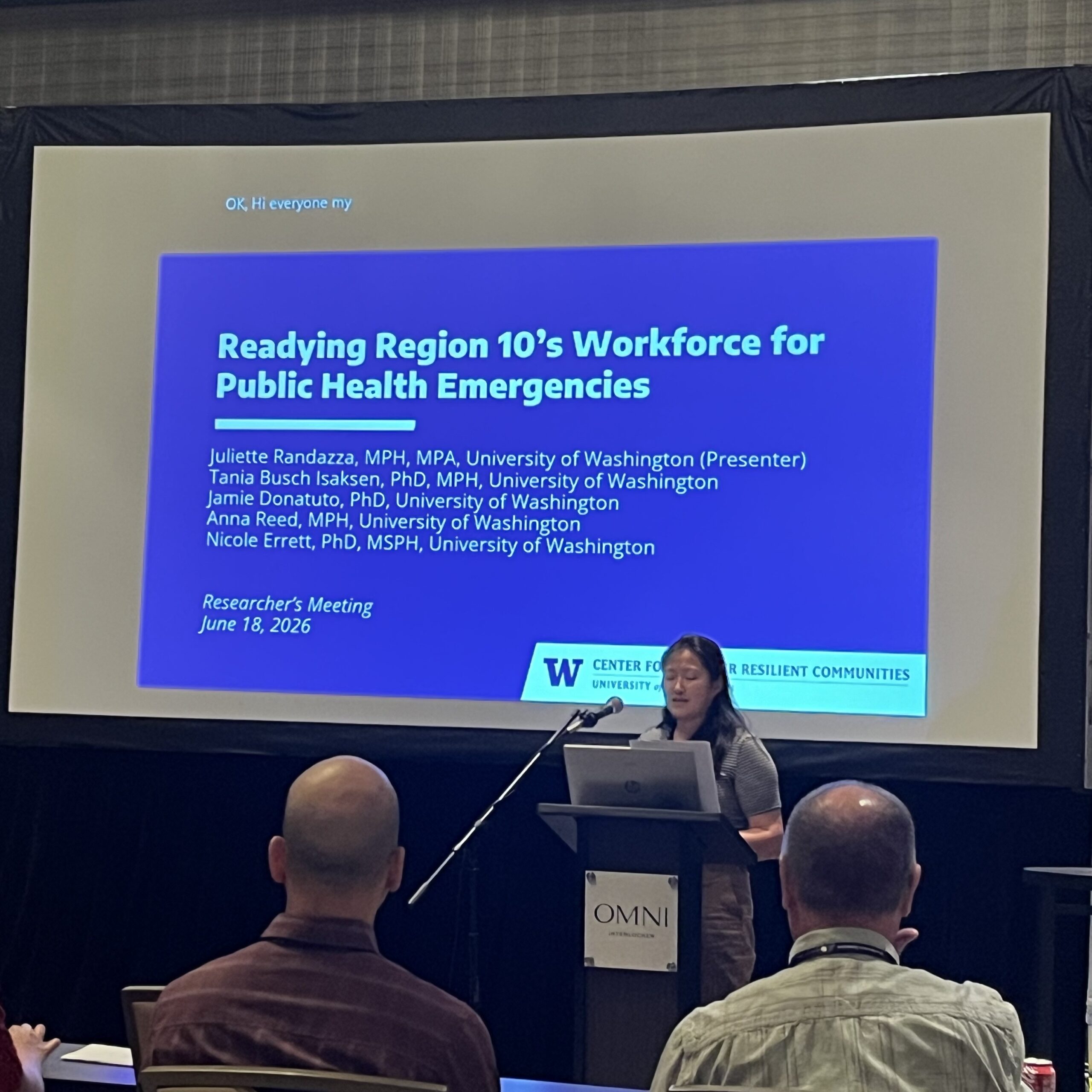
CDRC research was also prominent at the follow-on Researchers Meeting. Mary Hannah Smith, CDRC adaptation and resilience project manager, presented in the session, Advances in Disaster Risk Analysis and Resilience Assessment, on ongoing research into extreme cold response decision-making in Washington, which is an often overlooked hazard with significant impacts on people and infrastructure. Juliette Randazza (pictured), CDRC research coordinator, shared updates from the CDRC/Northwest Center for Evidence-Based Public Health Emergency Preparedness and Response Crisis Leadership Institute during a session on Understanding Health Risks Across Cascading Hazards.
PhD candidate Ashley Moore presented her dissertation research, “Local Partnerships for Public Health Emergency Preparedness in Region 10,” in the session Collaboration in Emergency Preparedness and Recovery, contributing new perspectives on working with community organizations and leaders in disaster preparedness. Errett also presented “Opportunities and Challenges: Plans as Data to Improve Evidence-Based Disaster Risk Management” as part of a session on Complex Systems and Compound Risk.
Beyond the sessions, the Workshop and Researchers Meeting offered valuable time to connect, reflect on the evolving research landscape and spark new ideas and collaborations.