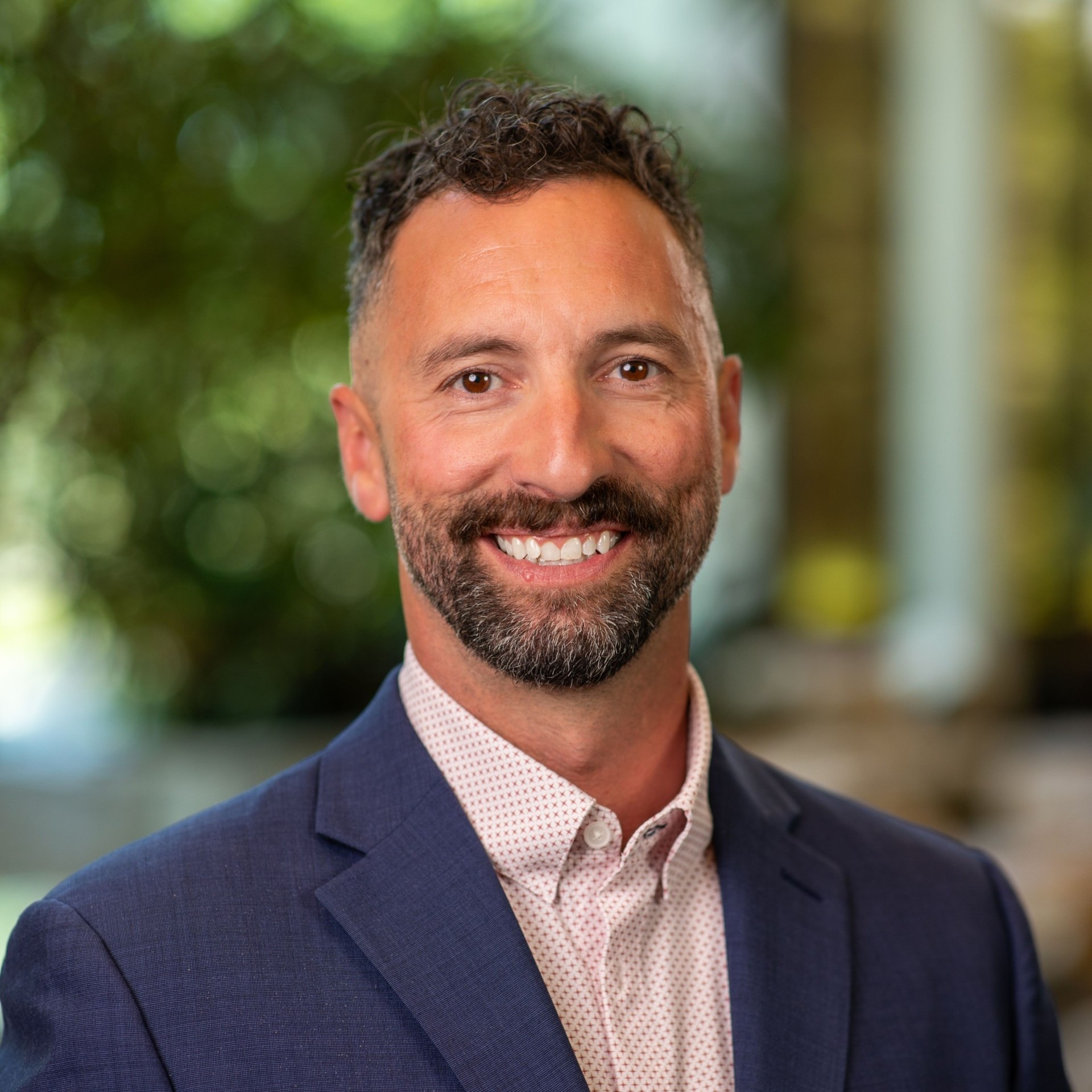
 Dustin Alger brings a strong commitment to public service to his new role as the emergency preparedness manager for the Idaho Department of Health and Welfare, where he oversees a team of seven.
“I come from a family that has always served in the military. My grandfather served in World War II; my dad and all his brothers served in Vietnam; I served in the Army; and two of my brothers served. Service is just something that our family does,” said Alger. “I’m trying to set an example for my kiddos.”
When he assumed his role with the Idaho Department of Health and Welfare three months ago, he stepped into a position that had been vacant for a few months. Alger described his focus on updating systems and processes to align with resources and technology available today: “so we’re trying to update those and navigate a new world in terms of technology, infrastructure, and AI [artificial intelligence]-related concerns.”
Fortunately, Idaho is well positioned for emergency preparedness and response.
“I’ve been pleasantly surprised by the amount of expertise that already exists within the state,” said Alger. “Idaho is a diverse state with some pretty remote areas, but when you look at the infrastructure in place and the resources available, local districts and coalitions have fully met—and continue to meet—the demands of those areas with their ability to think ahead and plan for events.”
Alger said he looks forward to working to ensure a seamless flow of multidirectional communication and coordination among the state, districts and coalitions.
“I want to make sure that we’re coordinating so that Idaho is ready and prepared for whatever event unfolds for us,” said Alger
The culture of Idahoans contributes to the state’s emergency preparedness.
“I’ve been really impressed with the willingness of people to help their neighbors,” said Alger. “I think it speaks to the essence of Idaho and what it means to be a resident here.”
Helping people also comes naturally to Alger. After serving on three deployments with the second Battalion, 75th Ranger Regiment, he attended Evergreen State College. Afterward, he received a Master of Science from the University of New Hampshire, researching the efficacy of fly-fishing as a therapeutic intervention for veterans with post-traumatic stress disorder and traumatic brain injuries.
Since 2018, he has served on the board of directors for Rivers of Recovery, a nonprofit that provides immersion in nature and talk therapy to help combat veterans recover from post-traumatic stress. Alger has led many outings with Rivers of Recovery and says he benefits from them himself.
In 2024, a friend invited Alger to travel to North Carolina to help with search-and-rescue efforts after Hurricane Helene. Alger led a team of 10 to 15 people. Despite his experience in the Army, he said that nothing had prepared him for the devastation he saw in western North Carolina.
“I felt like I was in a war zone on the eastern seaboard of the United States,” he wrote in a post on LinkedIn. “Nothing prepares you to sift through mud, sand, tree debris, folded vehicles, and shredded houses, trying to find evidence of life.”
Seeing a response coordinated by federal, state, and local partners and volunteers was a new experience for Alger.
“That reignited my passion for getting back into public service,” he said. “When I got back to Idaho, I started thinking about what types of situations could occur in Idaho that would require a response like that. It didn’t take long to get motivated to find a role within the state that would allow me to be part of that type of response.”
His experience managing people in dangerous situations has prepared Alger well for his role as emergency preparedness manager.
“I have many years of experience dealing with emergency situations,” said Alger. “The best thing you can do is remain calm and use your head.”
Alger looks forward to engaging more with the Northwest Center for Evidence-Based Public Health Emergency Preparedness and Response (NWPHEPR) as he settles into his new position. He will join fellow Directors of Public Health Preparedness from Alaska, Oregon and Washington on the center’s steering committee. A member of his team also attended the 2026 Northwest Preparedness and Resilience Conference and he hopes that NWPHEPR will help his department use evidence-based approaches to advance public health preparedness across Idaho.
“I’d like to use their research and guidance to really refine our trainings and exercises so that, when we do implement them here, they have the best possible outcomes,” said Alger.